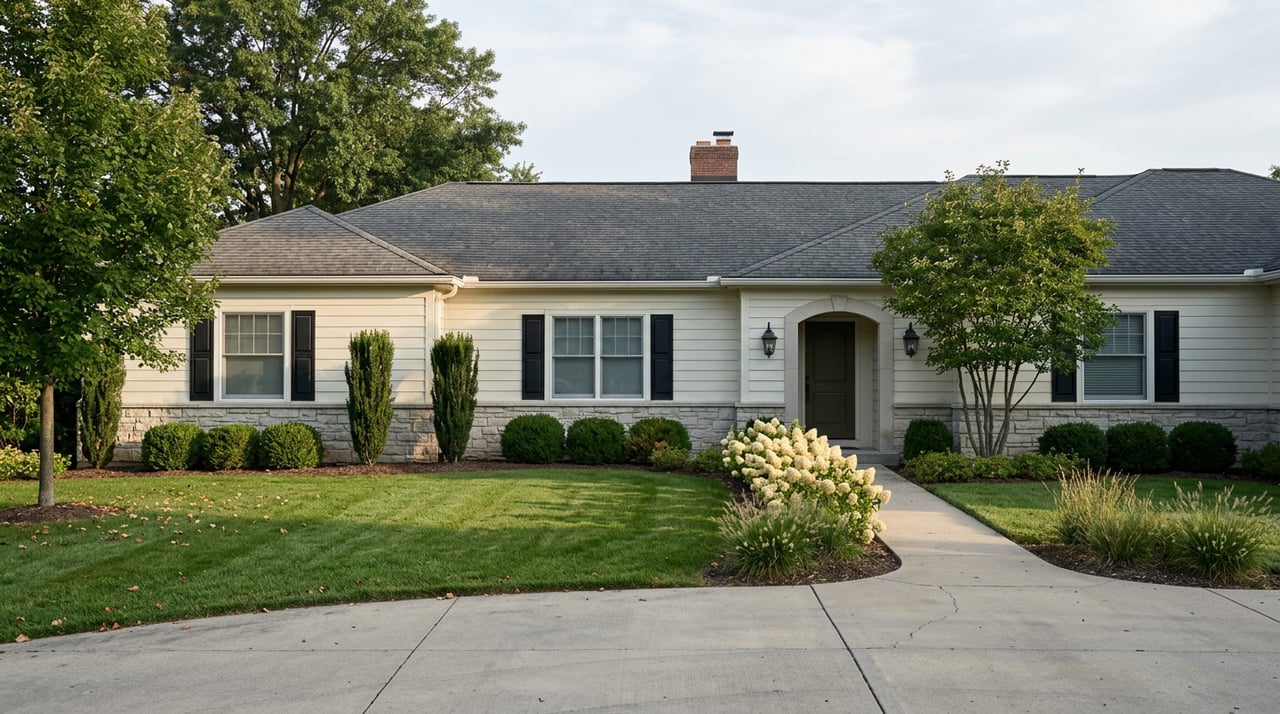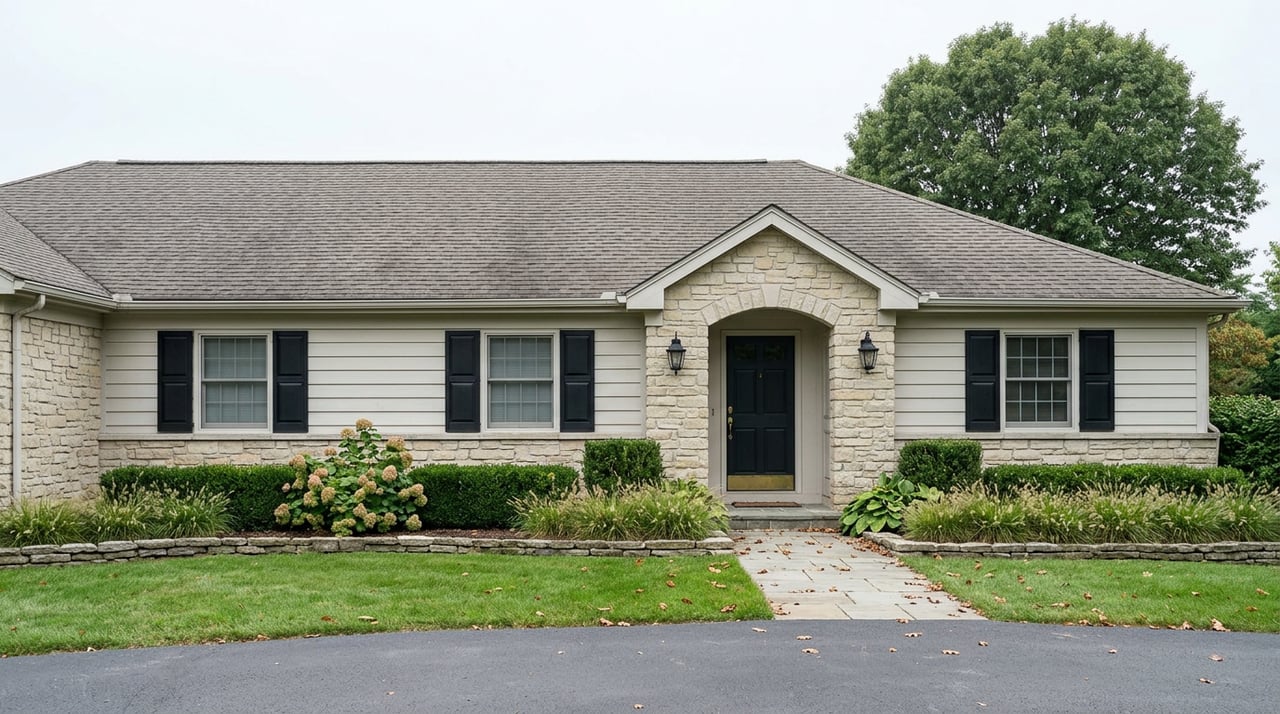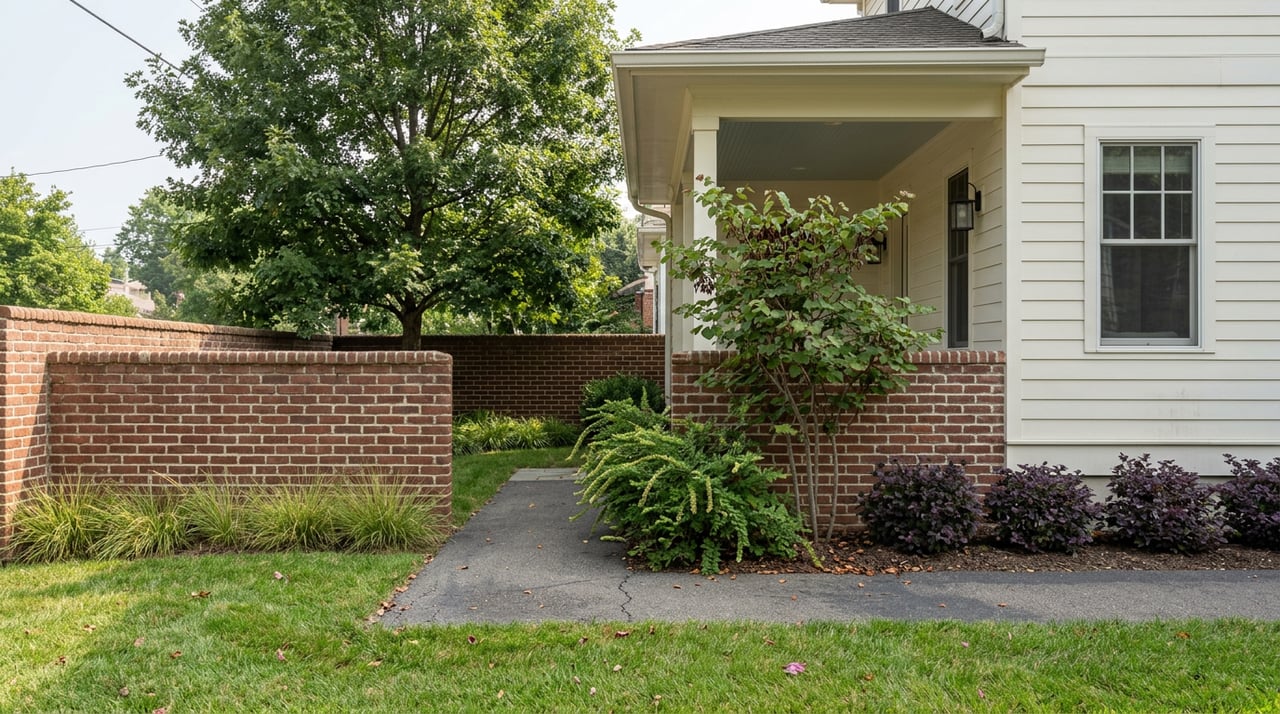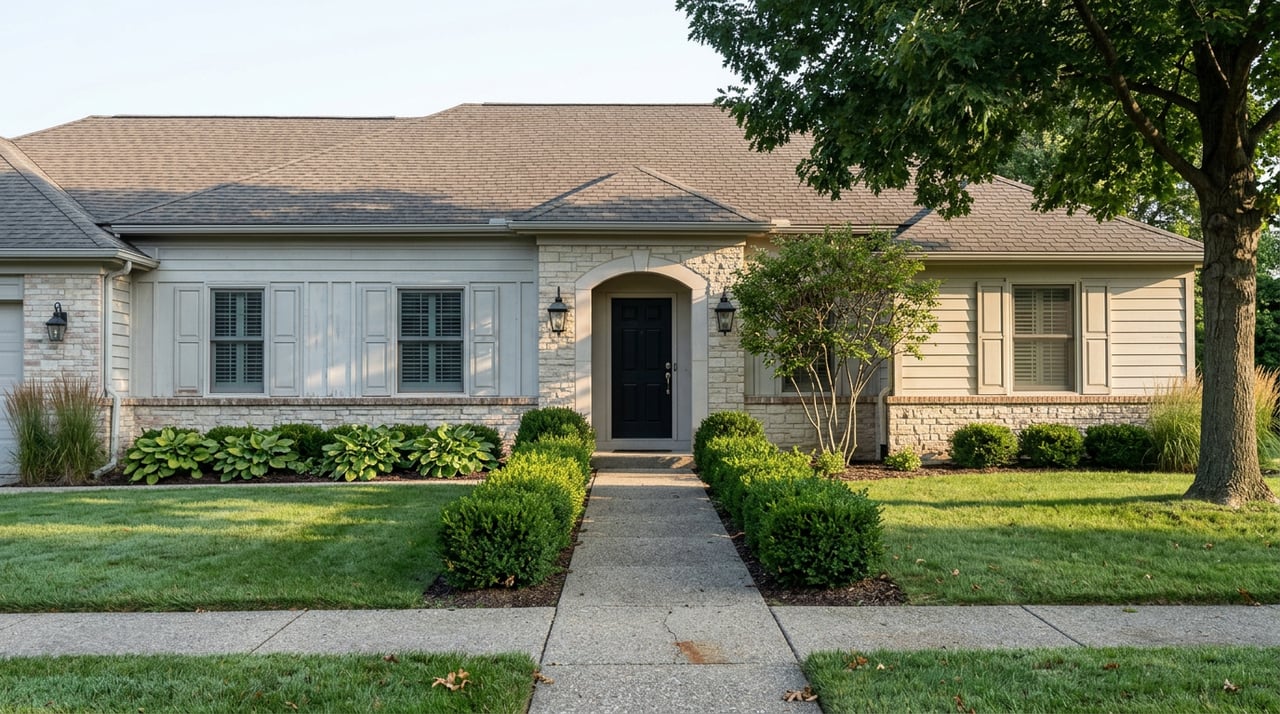
Picture two inspection reports landing on two different desks the same week. One flags lath-and-plaster cracking, a service panel that predates modern code, and a foundation that has settled the way 19th-century foundations do. The other flags a roof flashing detail the framer missed and an HVAC system that needs balancing before it will heat the primary suite evenly. Both houses are in Zionsville. Both might close in thirty days. Neither report would make sense to the other buyer.
That is not a coincidence of bad luck or a good or bad inspector. It is what happens when one town's housing stock spans more than a century of construction, sitting on the same difficult soil, and gets marketed under a single "small-town charm" umbrella that flattens the differences. If you are buying, selling, or just trying to understand what a repair estimate on your own street actually means, the neighborhood you are standing in tells you more about what the inspector will find than the listing price does.
One Address, Six Different Building Decades
Zionsville's real estate identity centers on the Village, the historic core with brick-paved streets and Federal, Italianate, and Queen Anne architecture dating back to the 1800s. But the town's growth since then has layered on distinct pockets that behave nothing like the Village once you get past the curb appeal:
- The Village — legacy foundations, original plaster systems, and electrical panels that have often been updated piecemeal over a century
- Holliday Farms — a golf course community of high-end custom new construction, where the risk is builder execution rather than age
- Stonegate — a traditional neighborhood development with a cohesive look but now old enough to be hitting mid-life mechanical failures
- Rockbridge — large lots with traditional family homes and a lot of exterior surface area to maintain
- Austin Oaks — an established luxury neighborhood under mature tree canopy, old enough that roots have had decades to work into pipes
Each of these is a different construction era wearing the same "Zionsville" label. That matters because a repair estimate that makes sense in one is a red flag in another.
What Inspectors Actually Look For in the Village
In the Village, the priority list runs toward legacy foundations, lath-and-plaster integrity, and whether the electrical panel has kept pace with modern loads. None of that is unusual for a home built in the 1800s or early 1900s. What is unusual is the layer of local policy sitting on top of it.
Zionsville's Town Council adopted Ordinance 2022-06 establishing a Historic Preservation Commission, with the goal of protecting homes identified as historic or architecturally worthy within a future Conservation District. The ordinance does not touch every old home in town. Only structures listed as "contributing" in the Zionsville Interim Report, an inventory originally commissioned through the Indiana DNR and Indiana Landmarks, fall under Commission review before an owner can demolish, move, or significantly alter the exterior. A 2021 update to that inventory, conducted by the SullivanMunce Cultural Center, surveyed 586 structures in the historic core, rating 29 of them outstanding and 90 notable.
The tension between preservation and redevelopment has not settled quietly. At an August 2024 Town Council session, a resident testified that Village homes are being demolished at an alarming rate, citing three homes scheduled for demolition before year's end, including one built in 1880 that was already coming down as she spoke. That is not a footnote from a decade ago. It is a live argument happening in town meetings about what happens to old Village housing stock as land values climb.
For a seller of a contributing Village property, this means renovation or demolition plans can require a Certificate of Appropriateness before work starts, which adds review time that a buyer's financing timeline may not accommodate. For a buyer, it means the "character" that made the home appealing may also come with restrictions on how much of it you're allowed to change.
New Construction's Punch List Looks Nothing Like the Village's
Holliday Farms sits at the opposite end of the age spectrum. As a premier golf course community built around high-end custom construction, its inspection findings skew toward what gets called builder oversight items: roof flashing installed slightly wrong, HVAC systems that need balancing to heat every room evenly, the kind of punch-list detail that shows up in a home finished last year rather than a century ago.
None of that is a red flag in the way a cracked foundation would be. It is the normal residue of a construction process, and it is usually still covered by a builder's warranty. The negotiation looks completely different too. In the Village, an inspection finding might reopen a conversation about price or repair credits. In new construction, the same conversation is often with the builder directly, not the seller.
The Middle Decades: Stonegate, Rockbridge, and Austin Oaks
Between the historic core and brand-new construction sit the neighborhoods old enough to have their own maintenance rhythm but too young to be historic.
Stonegate, a traditional neighborhood development with a cohesive architectural feel, is now reaching the point where water heaters are aging out and double-pane window seals are starting to fail. These are unglamorous, predictable, and rarely a reason to walk away from a deal, but they show up on nearly every inspection in that age bracket.
Rockbridge's large, traditional family homes tend to draw closer attention to cedar siding and stone veneer exteriors, simply because there is more exterior surface exposed to Central Indiana weather over the years. Austin Oaks, an established luxury neighborhood with mature trees, carries a different combination: root intrusion into sewer lines from decades of tree growth, and cedar shake roofs old enough to be nearing replacement.
None of these findings is unique to Zionsville. What is unique is how predictably they map to the neighborhood's construction era once you know what to look for.
The One Thing Every Zionsville Inspection Has in Common
Regardless of which decade a house was built in, it sits on the same difficult ground. Zionsville and the rest of Boone County are built on heavy, poorly draining clay soil combined with older glacial deposits, a geology that creates real friction for foundations, underground pipes, and drainage. That clay expands when wet and contracts when dry, putting steady pressure on whatever is buried in it and on basement walls above it. It is why sump pumps and careful yard grading are treated less as upgrades and more as basic infrastructure across the town.
Where the era does change the picture is in the plumbing material underground. Older sections near the Village core still run on cast iron or clay sewer laterals, the kind of pipe that tree roots can work into over decades. Newer subdivisions built off Michigan Road and toward Whitestown typically run PEX or copper, which resists root intrusion but is not immune to the same clay-soil movement and freeze-thaw stress that affects the whole county. A "clean" plumbing inspection in a five-year-old subdivision is answering a different question than a "clean" plumbing inspection in a 1900s Village home. Same soil, same climate, different failure mode.
What This Actually Means If You're Deciding Whether to List or Sell As-Is
If you own an older Village property that is classified as contributing, a full market listing often means budgeting real time for Certificate of Appropriateness review before any exterior repair or renovation work can start, on top of the usual pre-listing prep. That timeline can be the difference between a smooth spring closing and a deal that drags into a second season. For some owners in that position, an as-is sale sidesteps the review process entirely and hands the renovation timeline to someone who has already budgeted for it.
If you're in a newer subdivision like Stonegate or a custom-built community like Holliday Farms, the calculus flips. Inspection findings there tend to be cosmetic, mechanical, or covered under warranty rather than structural, which usually means a full listing captures more of the home's value without the same preservation-related friction.
Either way, knowing which category your address falls into before you get an inspection report back means fewer surprises and a clearer sense of what you're actually negotiating over.
A Few Quick Questions
Does every old home in the Village fall under the historic preservation ordinance? No. Only structures identified as "contributing" in the Zionsville Interim Report, the inventory tied to the Indiana DNR and Indiana Landmarks survey, are subject to Commission review before demolition or major exterior changes.
Is clay soil a reason to avoid buying in Zionsville? Not on its own. It's a town-wide condition that's managed with proper sump systems and grading rather than a defect specific to any one home or neighborhood.
Does a newer subdivision mean a spotless inspection? Not necessarily. New construction tends to surface builder-execution details, like roof flashing or HVAC balancing, rather than the age-related issues found in older homes. Different findings, not fewer of them.
Every one of these neighborhoods has its own version of "normal," and knowing which version applies to your address changes how you read an inspection report, how you negotiate, and whether a full listing or a faster as-is sale actually serves you better. That's the kind of local read that only comes from working these streets directly.
If you're weighing that decision on a Zionsville property, from a Village bungalow to a Holliday Farms build, The Molife Group can walk through what your specific address is likely to face and lay out both paths side by side. Get your no-obligation offer and find out which one fits your timeline.