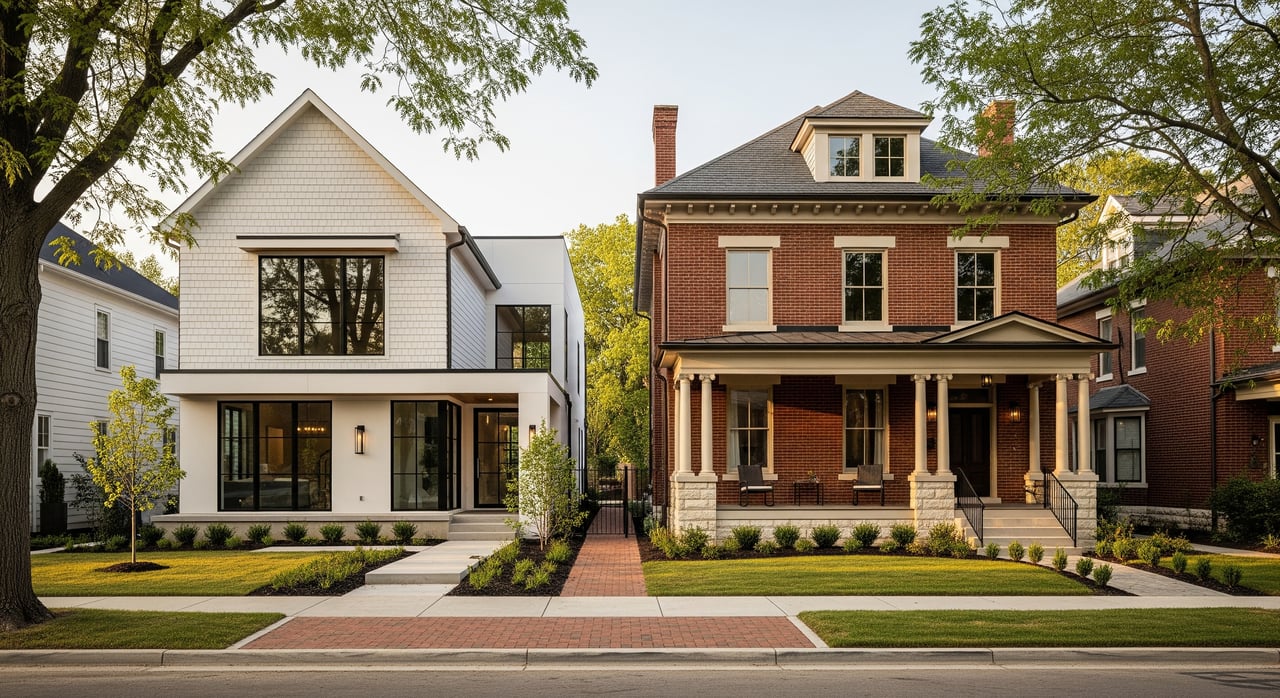
Thinking about buying in Zionsville and torn between a brand-new build and a well-loved resale? You are not alone. Both paths can work in Boone County, but the right choice depends on your budget, timeline, and the lifestyle you want in and around the Village and nearby neighborhoods. In this guide, you will learn how new construction and resale compare on costs, timing, maintenance, customization, location, and long-term value in Zionsville. Let’s dive in.
New vs. resale: how to decide
Choosing between a new build and a resale is not just about price. It involves how quickly you need to move, how much you want to customize, and how you feel about established neighborhoods versus emerging communities. In Zionsville, local permitting, HOAs, and builder practices also shape the experience. Start with your top three priorities and use the comparisons below to match the right option to your needs.
Price and upfront costs
New construction costs
New-home pricing often begins with a base price, then rises with a lot premium and the finishes you choose. Some new subdivisions include HOA initiation fees or developer-required infrastructure charges, which affect your total. Ask for an itemized estimate that includes upgrades, utility connections, and any impact or tap fees so you can compare apples to apples.
Resale costs
Resale homes reflect location, lot size, age, and past renovations. You may pay less upfront on upgrades, but plan for inspection-related repairs or immediate improvements. Closing timelines can be faster than a build, which may reduce temporary housing costs or rate-lock risks.
Ongoing costs in Zionsville
New homes typically offer lower maintenance in the early years and can deliver better energy performance if built to current codes. Older homes can have lower property taxes in some cases, depending on assessed value and exemptions set by county rules. Review Boone County assessment details and compare utilities for similarly sized homes to understand the long-term budget impact.
Financing and loan options
New construction sometimes uses construction-to-permanent loans or builder-arranged financing. Some builders offer incentives like closing cost credits or rate buydowns, which can change the best loan choice for you. Resale purchases usually rely on standard mortgage products with established comparable sales, which can make appraisals more straightforward.
Timeline and certainty
New builds follow a schedule that includes permitting, site prep, and vertical construction, and timelines can shift with weather or material availability. Your contract should include a realistic delivery window and how delays are handled. Resale can close in a standard timeframe, but factor in any repairs you want done before move-in.
Condition, warranties, and hidden costs
New construction often comes with a builder warranty that covers workmanship and major systems for defined periods. Confirm what is covered in year one, and what structural coverage exists in later years. With resale, a thorough inspection helps you plan for near-term expenses like roof, HVAC, or plumbing upgrades, and you can negotiate credits based on findings.
Customization and design
With a new build, you can often choose floor plans, structural options, and finish packages if you buy early enough. Builders may charge for change orders, so finalize selections before work begins to control costs. Resale homes offer established character and landscaping, and you can remodel over time if you want to personalize the space.
Energy, tech, and codes
New homes must meet current building codes for insulation, windows, and mechanical efficiency. That can translate into lower utility bills and better indoor comfort. Older homes may have retrofits, so review any documented upgrades and ask for energy usage history to compare.
Location and lifestyle
Established Zionsville neighborhoods, including areas near the brick Main Street in the Village, can offer walkability, mature trees, and quick access to local amenities. New communities are often on the edges of town with modern layouts, new amenities, and HOA standards that guide exterior appearance. Consider commute patterns, lot sizes, and HOA rules when comparing.
Resale value and appreciation
Both new and resale homes can perform well over time, but drivers differ. Established, amenity-rich locations can command premiums, while new communities gain value as amenities complete and the neighborhood matures. Quality of construction, lot selection, and ongoing maintenance play a major role in long-term results.
Inspections, disclosures, and risk
For resale, make inspection contingencies central to your offer and review disclosures and county records for easements or assessments. For new builds, clarify inspection access points, such as pre-drywall and final walkthroughs, and document punch-list timelines in writing. Ask for the sample builder warranty and keep records of all selections and change orders.
Decision checklist: which path fits you
Choose new construction if
- You value low maintenance in the first years and want modern energy performance.
- You want to customize layout and finishes and can wait for a build schedule.
- You are comfortable budgeting for base price, lot premium, and upgrades.
Choose resale if
- You want a faster move-in and established neighborhood character.
- You prefer mature landscaping, larger lots in some areas, or proximity to the Village core.
- You are open to inspections and possible updates in exchange for location or price advantages.
Zionsville buyer checklists
If you are considering new construction
- Confirm builder reputation, recent projects, and warranty terms.
- Request a sample warranty outlining 1-year and structural coverage.
- Ask for a total cost worksheet: base price, lot premium, required upgrades, utility connections, and any impact fees.
- Clarify the timeline, weather or supply delay policies, and completion expectations.
- Review neighborhood covenants, estimated HOA dues, and design rules.
- Secure inspection rights for pre-drywall, mechanical, and final walkthrough stages.
- Verify your appraisal strategy with your lender if comps are limited nearby.
If you are considering resale
- Order a full home inspection and add specialized checks as needed, such as HVAC or sewer scope.
- Review seller disclosures and recorded documents for easements or assessments.
- Confirm that any renovations had proper permits and ask about remaining warranties.
- Compare historical utility costs with similar new homes to understand efficiency tradeoffs.
- Decide whether to request repairs or negotiate a credit after inspections.
If you are selling a resale
- Request a preliminary net sheet for your planned sale and next purchase.
- Align timing if you plan to buy new, including temporary housing options if needed.
- Highlight strengths relative to new builds, such as lot size, mature trees, or proximity to amenities.
- If speed matters more than price, evaluate an as-is cash option to simplify your move.
Zionsville specifics to verify early
- Property taxes and reassessment timing through county resources.
- School attendance boundaries and any recent changes.
- Current building permit requirements, fees, and inspection milestones.
- HOA formation and covenants in new subdivisions, including rules that affect future exterior changes.
Next steps
If you want help comparing a specific new community to an existing Zionsville neighborhood, we can walk you through costs, timelines, and potential resale paths. Whether you need a fast, as-is cash sale or a full-service listing and purchase strategy, The Molife Group is ready to help you move forward. Get your no‑obligation offer or schedule a buyer consultation today.
FAQs
What costs make new construction higher in Zionsville?
- Base price, lot premiums, required upgrades, and connection or impact fees can raise total costs compared with the advertised base.
How long does a new build usually take locally?
- Timelines vary by permitting, weather, and builder schedules, so confirm your contract window and what happens if delays occur.
Do new homes have lower utility bills than resale?
- New homes must meet current codes that can improve efficiency, but compare usage history and features to understand your specific home’s costs.
How do property taxes differ for new vs. resale?
- Taxes depend on assessed value and county rules; verify assessments and any exemptions before you finalize your budget.
Are appraisals tougher for new builds in Zionsville?
- Appraisals may rely on limited nearby comps in new subdivisions, so coordinate with your lender on valuation strategy early.
What inspections should I do on a resale?
- Start with a full home inspection and add specialized checks as needed, such as roof, HVAC, or sewer scope, based on the home’s age and condition.
How can a resale compete with new construction when selling?
- Emphasize unique advantages like lot size, established landscaping, and location near amenities, and consider updates or pricing strategy to stand out.